Building the Infrastructure
Powering the AI Era
Coherent Expands U.S. Manufacturing Capacity to Support the Next Generation of AI Infrastructure
Jun 18, 2026 by Coherent
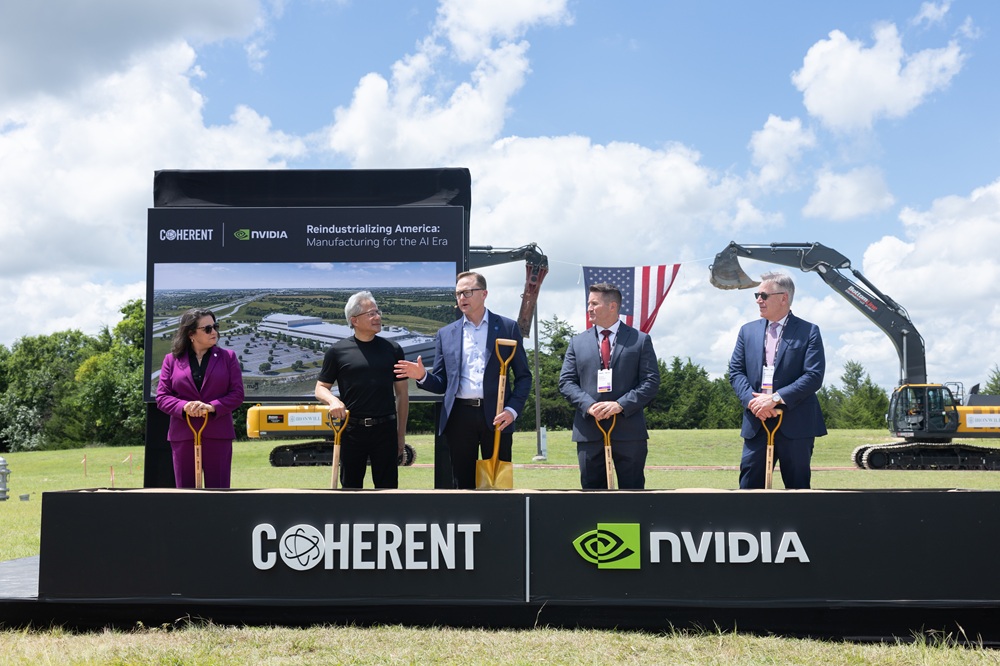
As AI systems scale, optical connectivity and advanced manufacturing are becoming critical enablers of next-generation infrastructure. Coherent's expansion in Sherman, Texas reflects the growing importance of photonics in the AI era.
Artificial intelligence is transforming industries at an unprecedented pace. As AI models grow larger and more capable, the demands placed on computing infrastructure continue to increase. While much attention focuses on processors and computing power, another challenge is rapidly emerging: moving vast amounts of data efficiently across increasingly complex systems.
The future of AI depends not only on compute, but also on connectivity.
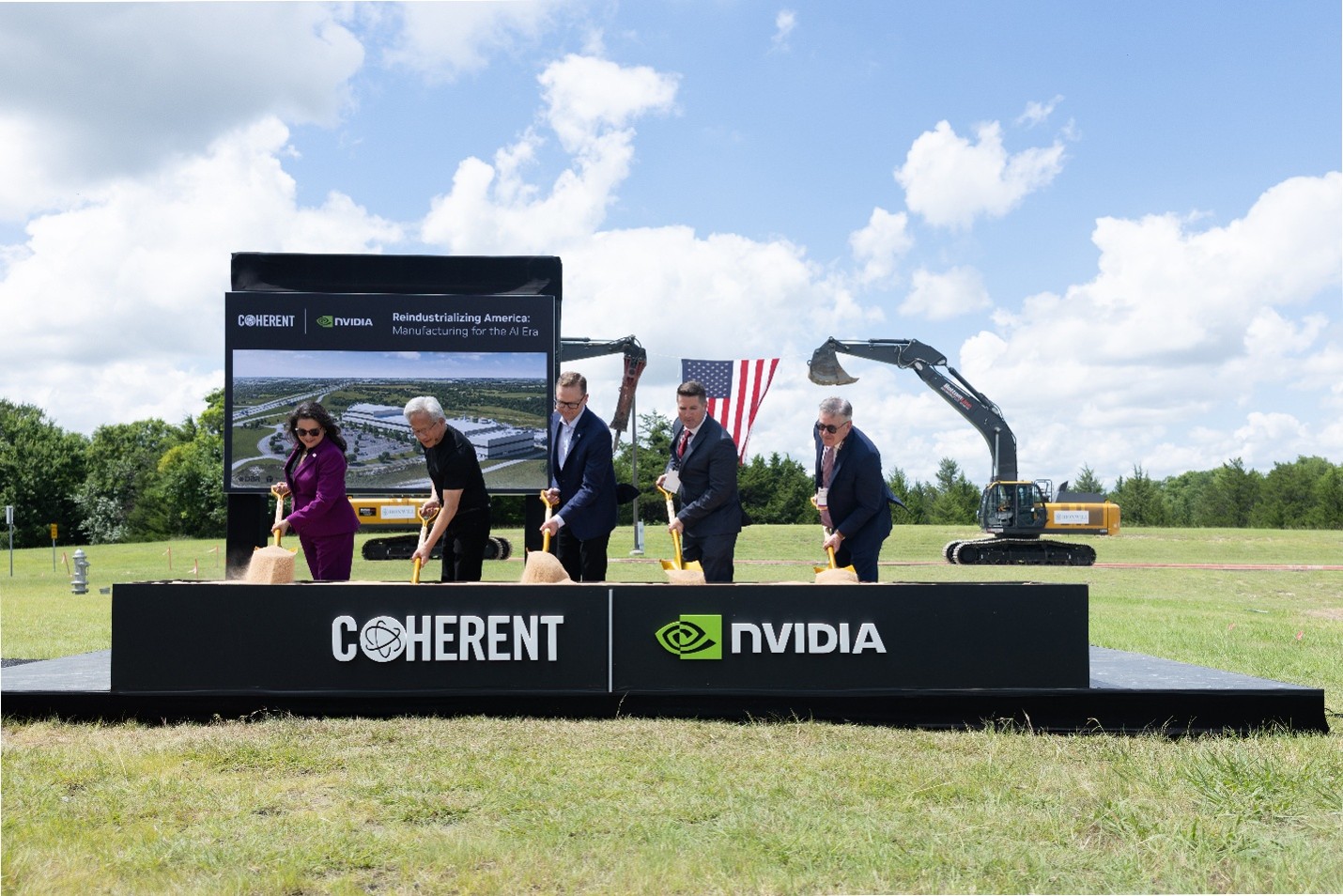
That reality was at the center of Coherent's recent event in Sherman, Texas, Reindustrializing America: Manufacturing for the AI Era, where the company announced the modernization and expansion of its Sherman manufacturing facility and celebrated a proposed $50 million CHIPS and Science Act award from the U.S. Department of Commerce to support the investment in U.S. manufacturing.
The event highlighted a broader trend reshaping the technology landscape: the convergence of AI growth, advanced manufacturing, and critical infrastructure investment.
The Connectivity Challenge of AI
Every AI system depends on three essential capabilities:
- Computing power
- Memory
- Data movement
As AI clusters scale to thousands of processors and accelerators, the ability to move data quickly, efficiently, and reliably becomes increasingly important. In many cases, connectivity is emerging as the next major bottleneck to AI performance.
Photonics and optical networking technologies address this challenge by enabling information to travel using light rather than traditional electrical connections.
Optical technologies provide higher bandwidth, longer reach, and greater energy efficiency, allowing processors, memory systems, servers, and datacenters to function as a unified computing platform. As AI infrastructure continues to expand, these capabilities are becoming foundational to next-generation systems.
Building the Manufacturing Foundation for AI
Meeting the growing demand for AI infrastructure requires more than technological innovation. It also requires advanced manufacturing capacity capable of producing critical components at scale.
Coherent's Sherman facility plays an important role in that effort.
For decades, Sherman has been a center of compound semiconductor innovation. Today, the site serves as one of the world's most advanced manufacturing facilities for optical technologies based on indium phosphide (InP), a semiconductor material uniquely suited for high-performance optical communications. These technologies generate, manipulate, and detect light to enable the high-speed movement of data throughout modern AI datacenters.
The facility is home to the world's first and largest volume-production 6-inch indium phosphide manufacturing platform. Through the planned expansion, Coherent will double its manufacturing footprint from 70,000 square feet to 140,000 square feet and increase wafer production capacity by a factor of four.
These investments will significantly strengthen domestic production of the optical technologies required to support future AI infrastructure.
Reindustrialization Through Technology Leadership
The growth of AI is creating ripple effects far beyond software and computing.
Across the United States, AI-driven investment is accelerating demand for datacenters, energy infrastructure, advanced manufacturing, engineering talent, workforce development, and resilient supply chains.
The Sherman expansion reflects this broader transformation.
Upon completion, the project is expected to support more than 1,000 direct and indirect jobs, including more than 550 advanced manufacturing, engineering, and technical positions.
This combination of technology investment, manufacturing growth, and workforce development represents a practical example of reindustrialization in action, strengthening both innovation leadership and economic opportunity.
A Shared Vision for the Future of AI Infrastructure
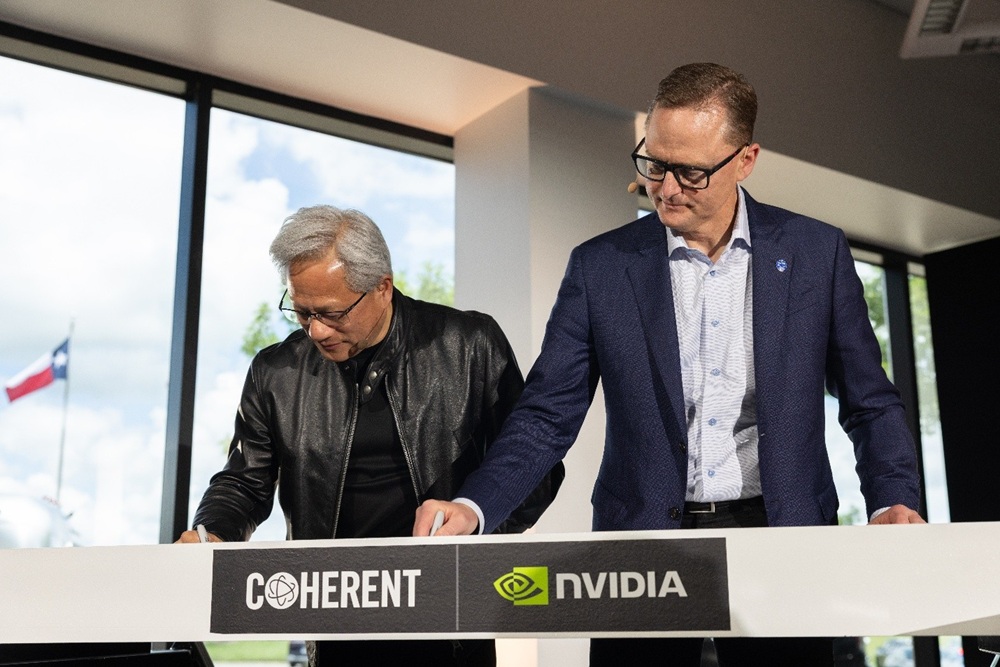
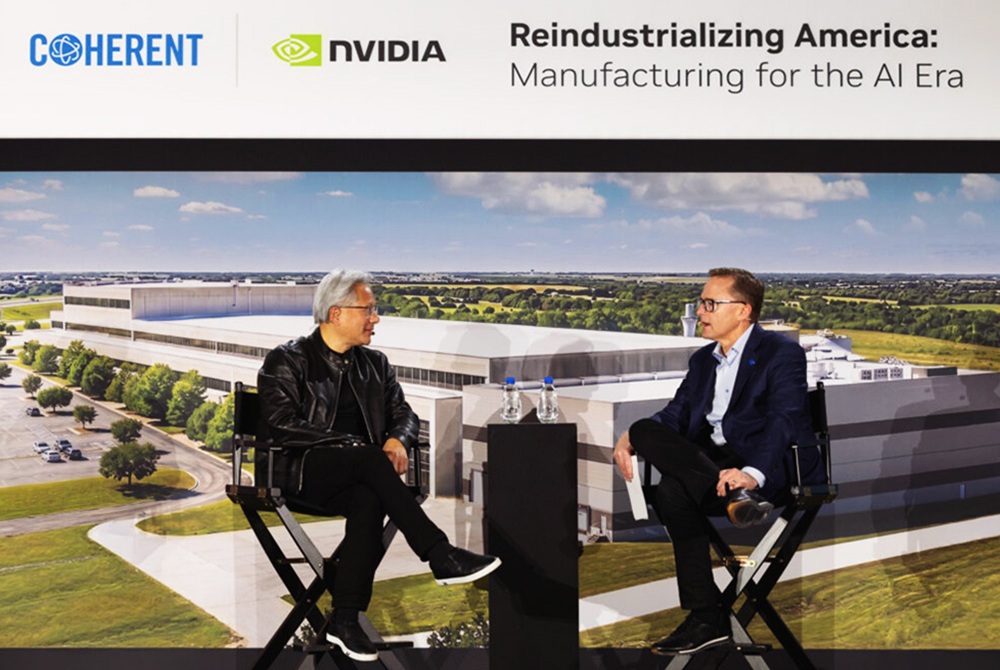
A highlight of the Sherman event was a discussion between Coherent CEO Jim Anderson and NVIDIA Founder and CEO Jensen Huang focused on the future of AI infrastructure, manufacturing, and innovation. The conversation underscored a growing industry consensus: scaling AI requires not only advanced computing platforms but also the infrastructure and connectivity that allow those platforms to operate efficiently at unprecedented scale.
As AI systems become larger, faster, and more interconnected, data movement is becoming just as critical as data processing. AI runs on compute, but it scales on connectivity.
Strengthening American Leadership in AI
More than breakthrough algorithms and advanced processors, the future of AI requires leadership in manufacturing, supply chains, infrastructure, and workforce development.
Coherent's investment in Sherman reflects a commitment to strengthening these capabilities while supporting growing customer demand for optical technologies that enable AI at scale.
As organizations around the world build increasingly sophisticated AI systems, demand continues to grow for greater speed, scale, resilience, and domestic manufacturing capacity. Success in the AI era will depend on the infrastructure that makes technological breakthroughs possible.
By expanding its manufacturing capabilities and advancing photonic innovation, Coherent is helping build the foundation for the next generation of AI infrastructure, demonstrating how technology leadership and manufacturing leadership can advance together.


